Porcelain Countertop Ideas: How the Countertop Took Centre Stage
The kitchen countertop is no longer simply a practical surface. It has become one of the most important architectural elements in the home, shaping the island, defining the material palette and connecting the kitchen with the surrounding living and dining areas.
A porcelain countertop is a large-format porcelain slab, used for countertops, islands, vanity tops and furniture. Because it is fired at very high temperature, porcelain is dense and non-porous: it resists heat, scratching and staining, and it never needs sealing. That combination is why porcelain has moved from the floor to the most visible surface in the home.
From warm stone effects to expressive marble-effect and wood-inspired finishes, today's countertops are designed to be seen, touched and lived with. Here are six kitchen countertop ideas shaping modern kitchens in 2026.
Warm, Natural and Seamless Countertop Colours
Cold, clinical kitchens are giving way to warmer and more inviting interiors.
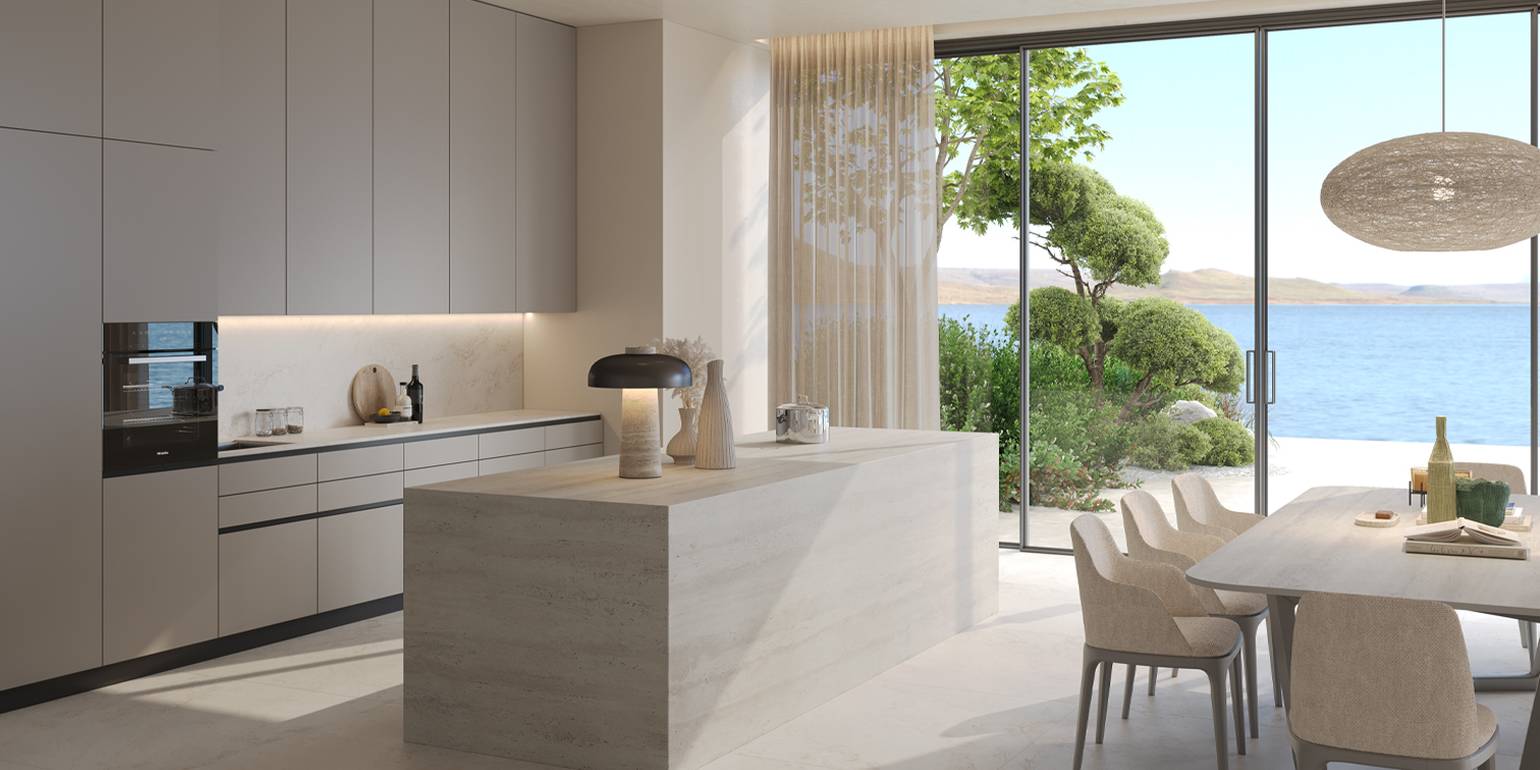
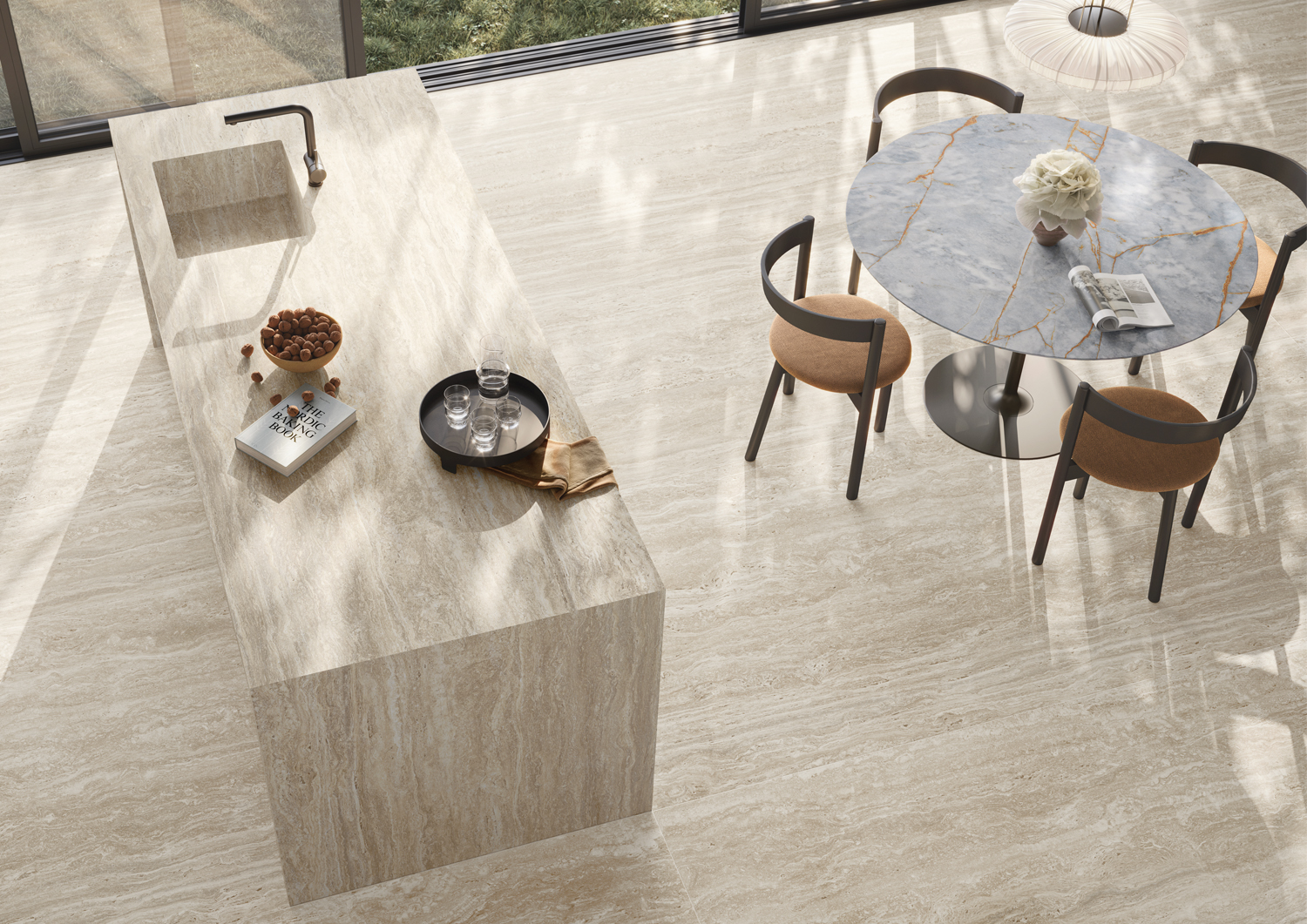
Ivory, sand, taupe and soft greige are being combined with natural wood, subtle textures and gentle mineral movement. Travertine effect countertops are especially popular because they bring depth and character without making the space feel visually busy. The movement reads as texture rather than as pattern, and that is what keeps a large surface calm.
Large-format surfaces also help create a more seamless look, allowing countertops, island sides and surrounding surfaces to flow together with fewer interruptions. Porcelain slab countertops measuring up to 162 x 324 cm can cover a generous island top with no visible join at all.
A practical note on pairing: a warm neutral countertop works best against cabinetry one or two shades deeper in the same family. The contrast stays soft, and the surface remains the focal point rather than competing with the joinery.
The Kitchen Island Countertop as an Architectural Feature
The kitchen island is increasingly being treated as a sculptural object rather than a separate piece of furniture.
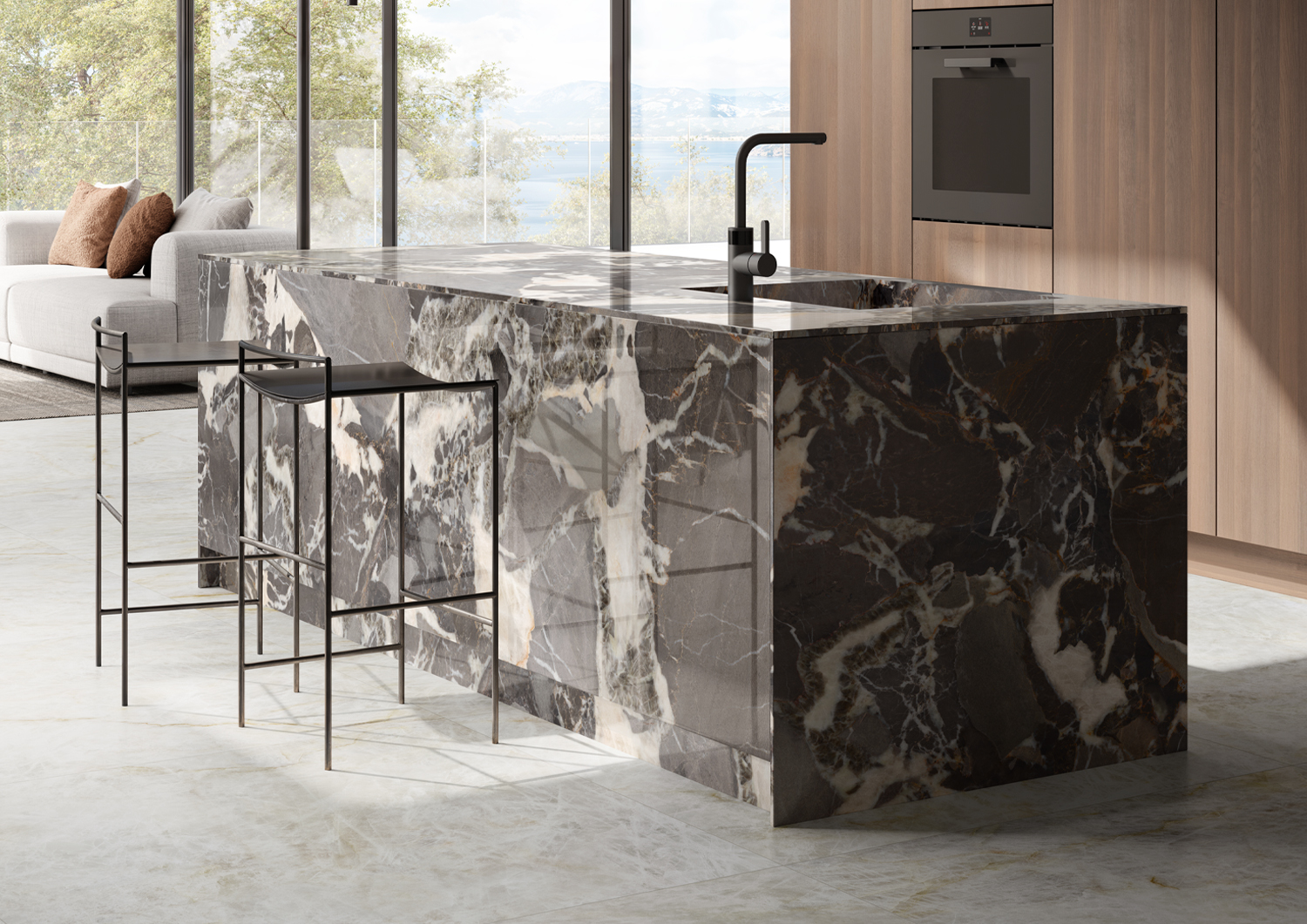
Continuing the same surface across the top and down the sides, in what is often called a waterfall edge, creates a strong monolithic form. Quiet stone effects produce a calm, timeless atmosphere, while a highly veined marble-effect design turns the island countertop into the defining feature of the room.
Through-body veining, where the pattern runs through the full thickness of the slab rather than sitting only on the face, means mitred corners and exposed edges carry the same veining as the surface itself. It is the detail that separates a convincing island from an obviously surfaced one.
The more expressive the countertop, the simpler the surrounding cabinetry can be.
Wood-Effect Countertops and the Warmth of Grain
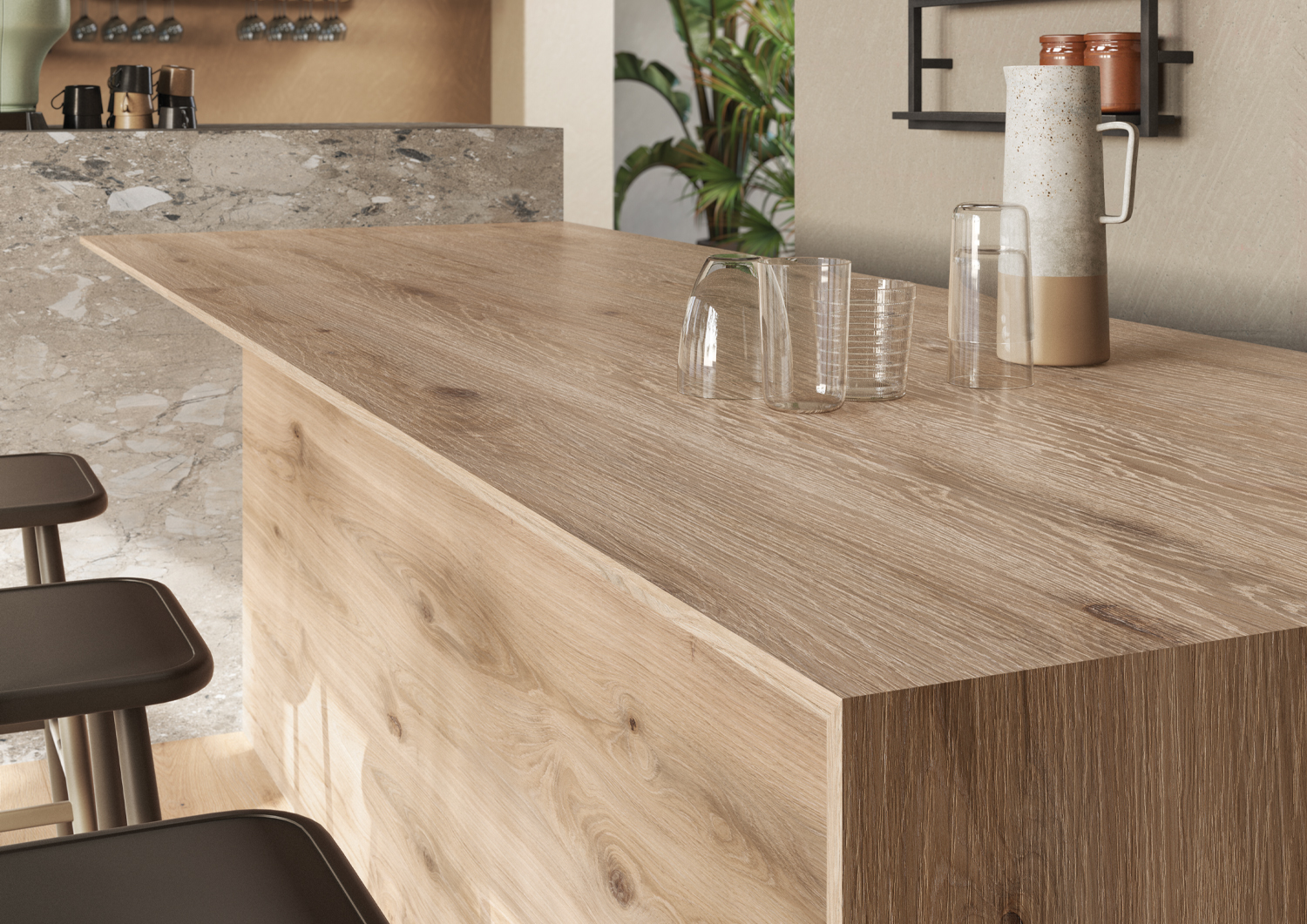
Wood-effect countertops bring more than warmth: they introduce rhythm, movement and a strong sense of craftsmanship through the grain in their design.
The linear pattern visually lengthens the island, while the rich texture softens surrounding materials such as concrete, metal and terrazzo. This contrast creates a kitchen that feels contemporary yet inviting, connecting the precision of modern architecture with the familiarity of natural materials.
The practical advantage over solid timber is straightforward: a wood-effect porcelain countertop does not absorb water, mark from oil or need periodic re-oiling. That is what makes it viable directly around sinks and hobs, where real wood rarely is.
Integrated Sinks, Hobs and Continuous Surfaces
Sinks, taps and cooking areas are also becoming more visually integrated.
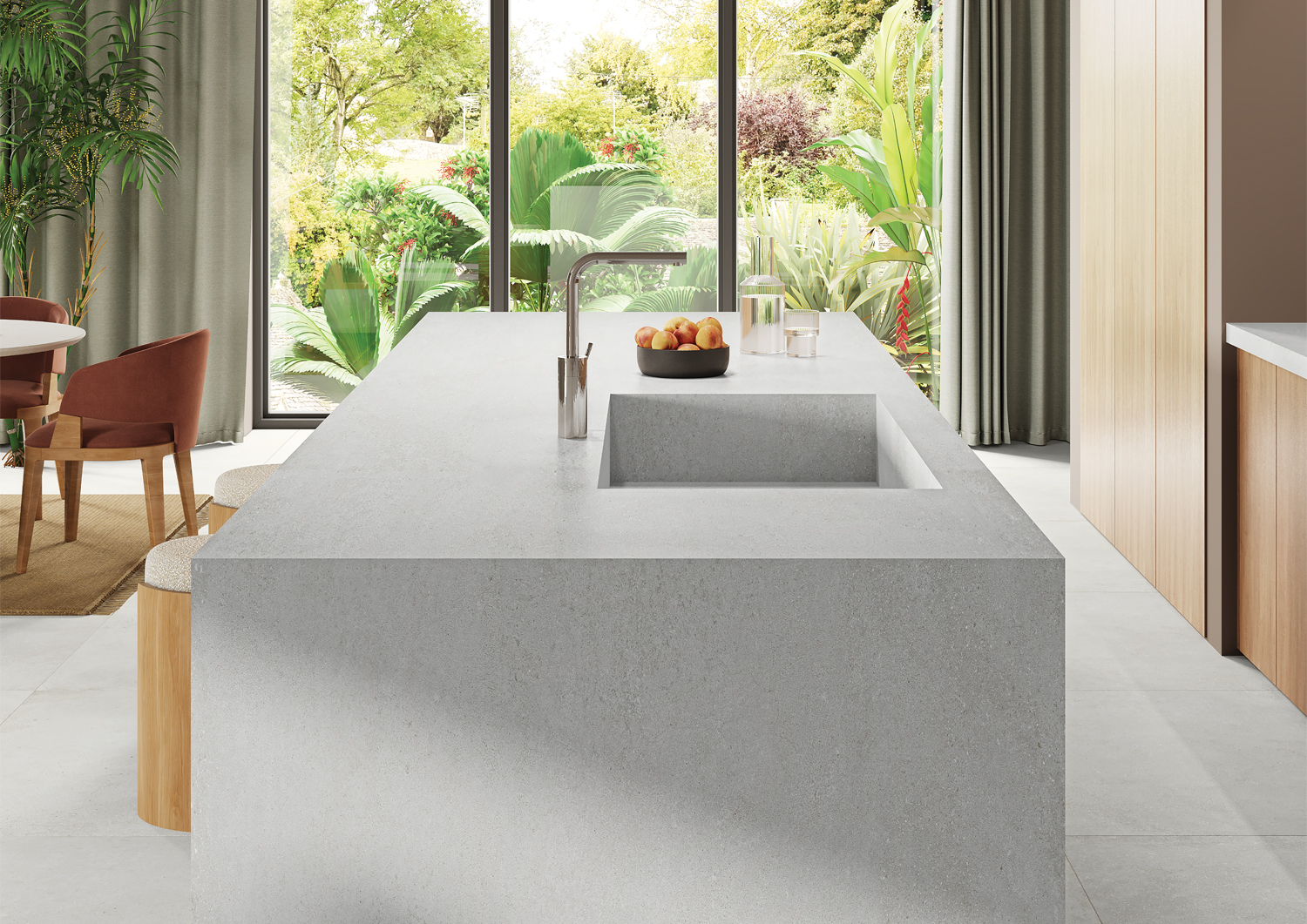
By reducing unnecessary joints and interruptions, the countertop can be read as one continuous architectural plane. Undermount sinks cut from the same slab, flush-fitted induction hobs and drainer grooves machined directly into the surface all support that reading.
At the same time, the countertop must remain practical enough for cooking, cleaning, serving and entertaining. The test of an integrated design is not how it photographs on the day of installation but how it behaves after five years of daily use.
Designed Around the Way We Live
The best countertop is not selected in isolation.
Its colour should complement the cabinetry, its pattern should suit the scale of the room, and its finish should respond beautifully to both natural and artificial light. A honed or matt finish absorbs light and conceals fingerprints, which suits a busy family kitchen. A polished finish reflects light and intensifies veining, which suits a statement island in a room that already has depth.
Whether quiet and minimal, warm and tactile, or bold and expressive, the countertop has become much more than a place to prepare food.
It is where material, architecture and everyday life come together.
Porcelain Countertops from RAK Ceramics
RAK Ceramics' Maximus large-format porcelain slabs are produced in sizes up to 162 x 324 cm and in 9 mm, 12 mm and 20 mm thicknesses, across marble, stone, concrete and solid colour effects. They are heat resistant, scratch resistant and easy to maintain, making them suitable for kitchen islands, countertops, vanity tops and furniture applications.