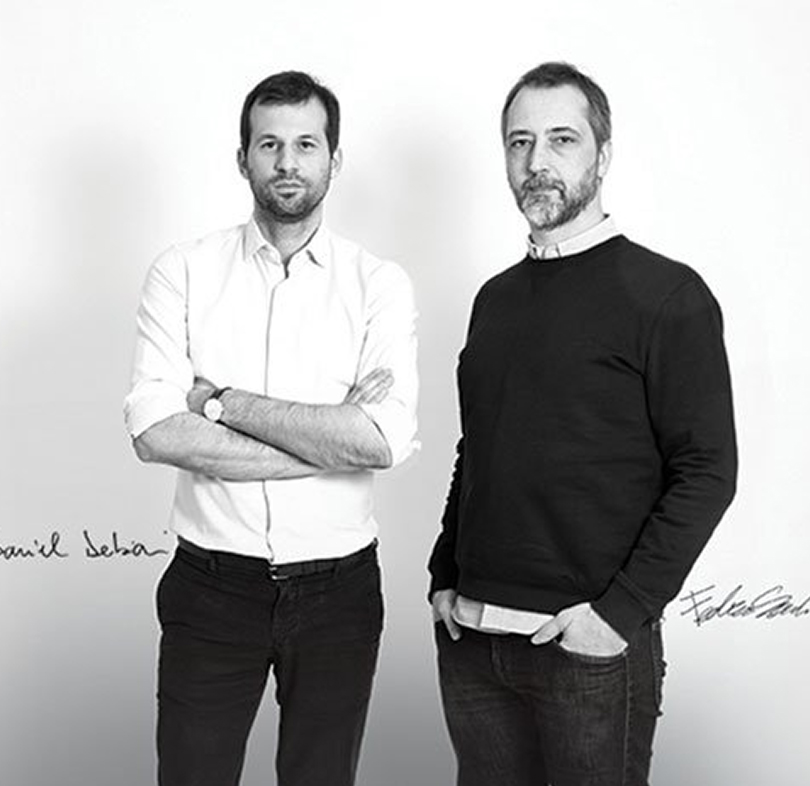
Designing
with grace
Debiasi Sandri’s design is openly silent. An exercise in clean lines that hides a philosophy of life, a respectful kindness to things and to people.
From 2010 to date, Daniel Debiasi and Federico Sandri have designed furnishing solutions for the bathroom, the living area and the kitchen, as well as lamps, accessories and seats, working with international companies such as Antoniolupi, Lema, Ligne Roset, Normann Copenhagen, Offecct, Rosenthal, Stelton and Villeroy & Boch.
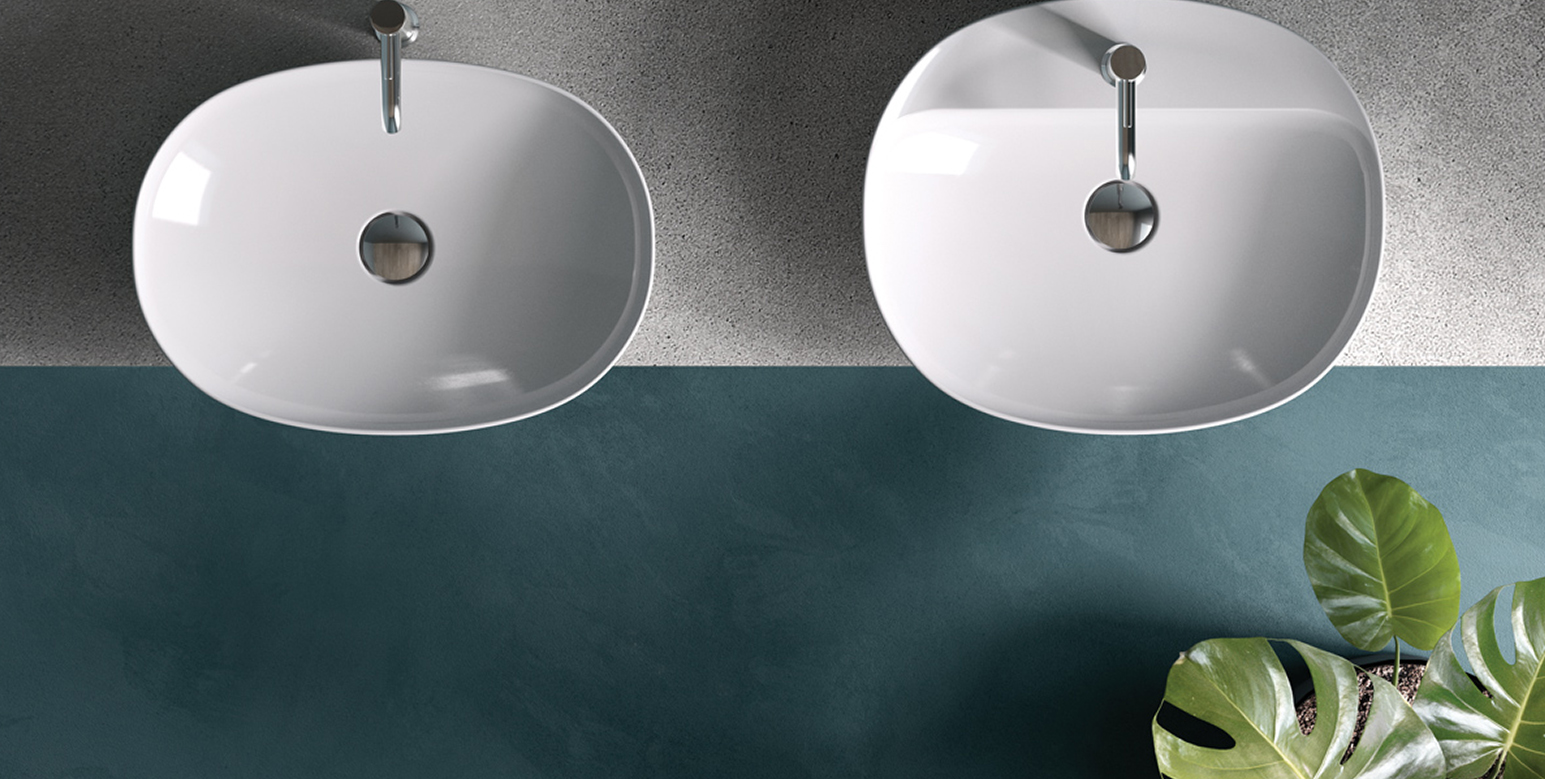
Their latest project with RAK Ceramics, the Variant washbasin range, is a tribute to the minimalism and delicacy of ceramic, which is the only real protagonist. We have met them to talk about this collection, explore their modus operandi and, finally, take stock of their last ten years of design.
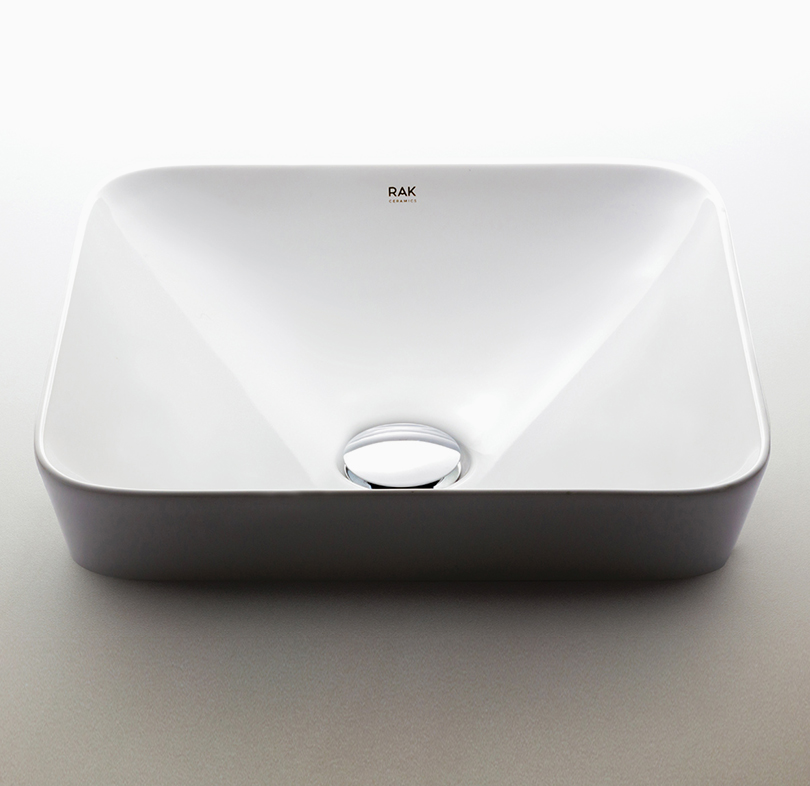
You are not new to the design of solutions for the bathroom: what makes Variant outstanding? It seems that you wanted to create a range able to fit in any aesthetic and cultural context. What was your idea?
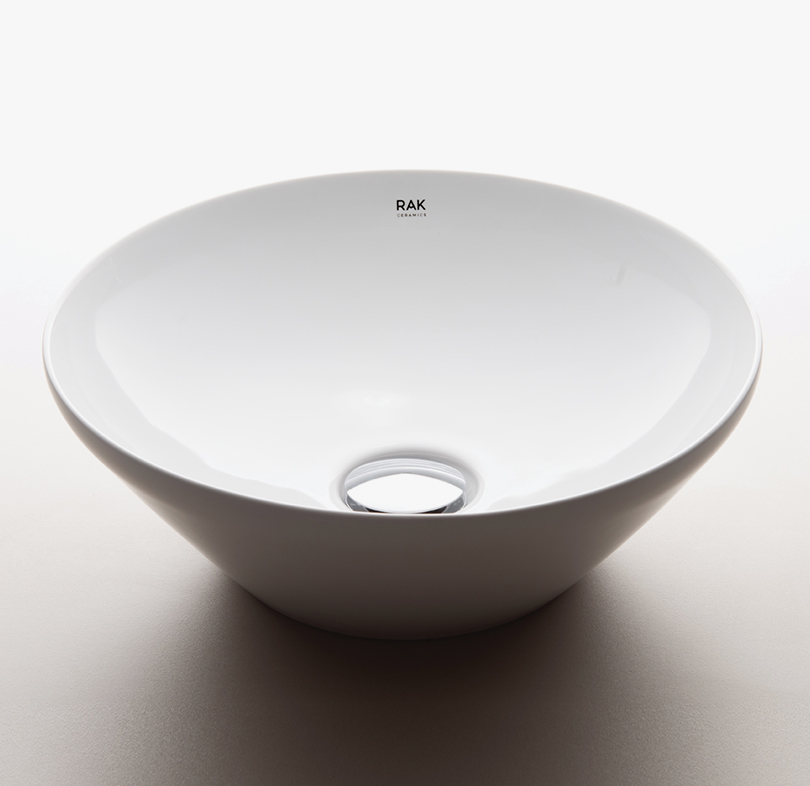
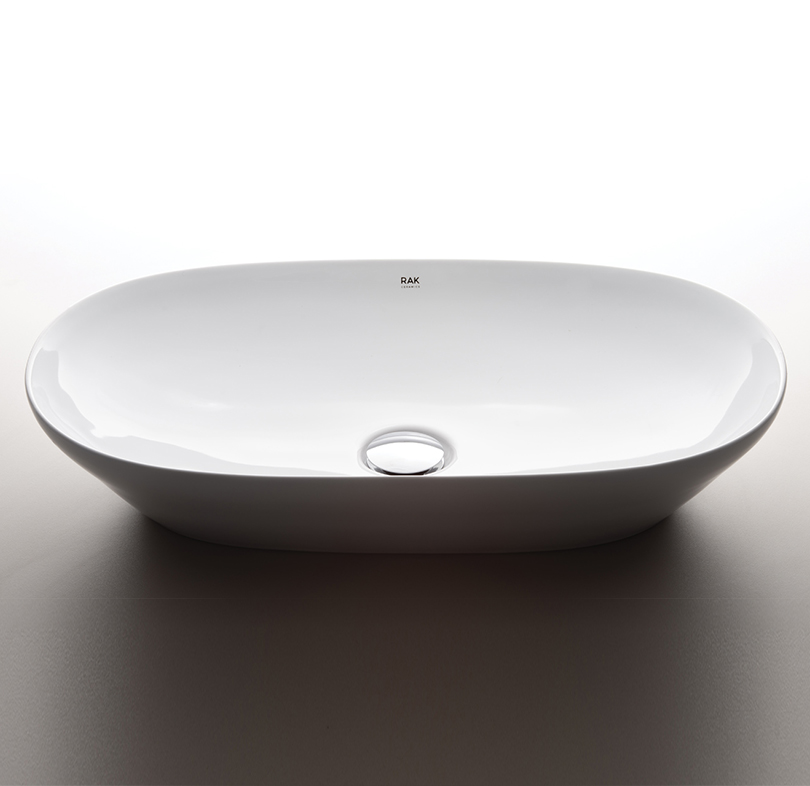
DD: As we do with all our projects, also for Rak Variant we had to manage different inputs to merge them into a single idea. First of all, we wanted a range of products with a formal synthesis that would make them suitable to different environments, such as residential, hospitality or public spaces. Therefore, we worked hard on the balance between the expressiveness and the silence of an object, looking for both personality and quietness in the product. Today people consider very carefully the objects with which they want to live and, in our opinion, we prefer to spend our time with less invasive objects. Another field we wanted to explore with this project was that of ceramic, a universe we have always loved. It is a difficult yet charming material that requires industrial production as well as considerable manual skills. In the production of Rak we have tried to express these qualities through precise geometries, ultrathin thicknesses, sober surfaces. We are very happy with the result: 25 simple washbasins, balanced but with character.
How would you define your design philosophy? What stimulates your creativity and how do you turn it into a product?
FS: We would define it as varied. Not all projects are born the same way: sometimes the departure point is the desire to express an idea, sometimes we wonder about the relationship between space, people and objects, sometimes we are fascinated by a certain material or technology that leads us to imagine its application. At a later stage, we also get to the formal aspect, which should not be neglected, of course, but we are not obsessed with a specific language. To put it simply, we often find ourselves connecting the information we receive with our experience to summarize and reorganize it all, (hopefully) making it tangible.
Coming to our inspiration, we think that everything may be useful: we often observe behaviors or situations – daily life is very important, like any other experience, such as travels, people, places. All this is translated into suggestions that sometimes we, even unconsciously, reuse when thinking about a new project. In addition to inspiration, there is also a lot of hands-on work: study, research and endless quarrels between us!
Is there a leitmotiv in your projects?
DD: I think that the word that better describes our design is “balance”, as we have mentioned earlier: balance between personality and discretion, simplicity and complexity, industrial precision and workmanship. I know that our work, simplifying a lot, often consists in carefully balancing different aspects that are often antithetical. We often wonder about the relationship between what we design and the surrounding space, as well as the relationship that people may establish with our products. We like to think that every project is able to evoke a memory, to pull out a smile or maybe start a chat.
The Variant line for RAK and the catalog of the Variant collection by RAK designed by Debiasi Sandri.

Has there been a division of roles between you two since 2010? How have your relationship and your design method evolved?
FS: When we work on a product, we are quite equivalent, although we may have a different approach, and it is fun to notice that we often reach the same conclusion despite following different paths. At the beginning, we hesitated to tell each other our ideas for a project, but now we feel free to criticize each other’s work. Perhaps we have aged badly! However, we believe that genuine dialogue can only be beneficial to our projects. On the contrary, when moving to other fields, such as art direction, graphic, interior and exhibit design, each one has his favorite activities, but, in the end, every project is the result of the work of both. One thing that keeps changing is our workplace: I used to live in Verona and Daniel in London; now Daniel has moved to Bolzano and I am in Bergamo. Of course, we meet often, with our clients or at the IUAV, where we teach, but our typical day begins with a black coffee and a good morning on Skype, where we stay connected until the evening, arguing and developing the projects we are working on.
What do you think about the bathroom? And how is it changing, in line with the changes taking place in the contemporary home?
DD: We think that the bathroom has bridged the gap with the rest of the house, also thanks to a small number of farsighted entrepreneurs and designers. At home it represents intimacy, a space for oneself, while in the hospitality sector it performs an important function that characterizes the overall experience, often going beyond the usual four walls. That’s why both end users and designers are very attentive to the configuration of this space: it is not about performance and aesthetic anymore; now other values, often belonging to the emotional sphere, are at stake.
Is there an adjective with which you like to define your design?
FS: Since increasingly more colleagues talk about simplicity, we would like to use the adjective “empathetic” if it has not been used yet! (they laugh, ed.)
This year your practice turns ten. Let’s take stock of these years. What were your biggest challenges? How will you celebrate?
DD: If you say it like this (“ten”), it seems like they are many, and they took us unawares, because being lucky enough to spend our days doing what we like is a bit like living in a soap bubble: we have not realized that all this time has passed. We have taken on a lot of challenges, every project is a challenge somehow. Maybe the most complex situations are those when we change setting and interlocutor: one day we work with a craftsman on a wood chair, the next we are in Seoul with five Korean engineers discussing of tenths of millimeter on printed circuits boards. For sure there is no time to get bored. We have never talked about celebrations but, now that you mention it, we must do something. We may exaggerate and organize a dinner with our families!
Salone del Mobile: can you give us a preview of what you will present?
FS: It is too soon for this. Every time we decided to work for the Salone we finished at the last minute; now we prefer to take our time to develop our projects. Of course, if it coincides with the Salone, we will be happy, but now we see this event as a chance to meet people and exchange ideas, a gauge we use to realize what’s going on in the small design universe. The occasions to unveil new projects during the year are many: at IMM and Maison&Objet we presented a vase collection for Ligne Roset, in Stockholm we presented Shift Wood, a new seat for OFFECCT. At Ambiente we celebrated our long collaboration with Stelton presenting Ora, a new series of home accessories we are very proud of. We are also completing a beautiful interior design project for Grassi Pietre; a showroom/workspace where we have tested ourselves by exploring all the possibilities offered by their materials. For the Salone, we will see!
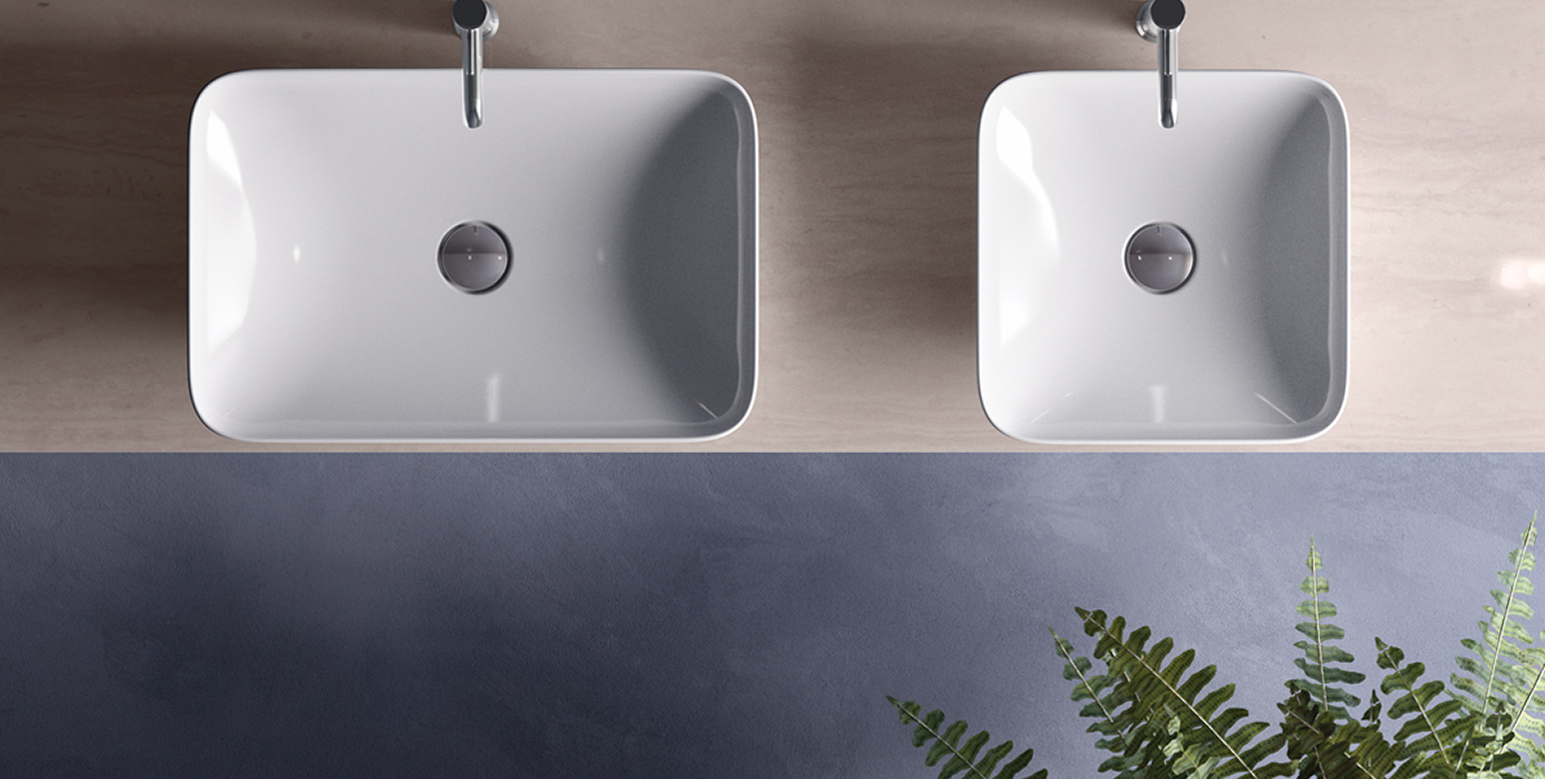
Two washbasin of the Variant collection by RAK and the product range available.